| Rank | Player | Time | Score |
|---|---|---|---|
| Fetching latest ledger completions... | |||
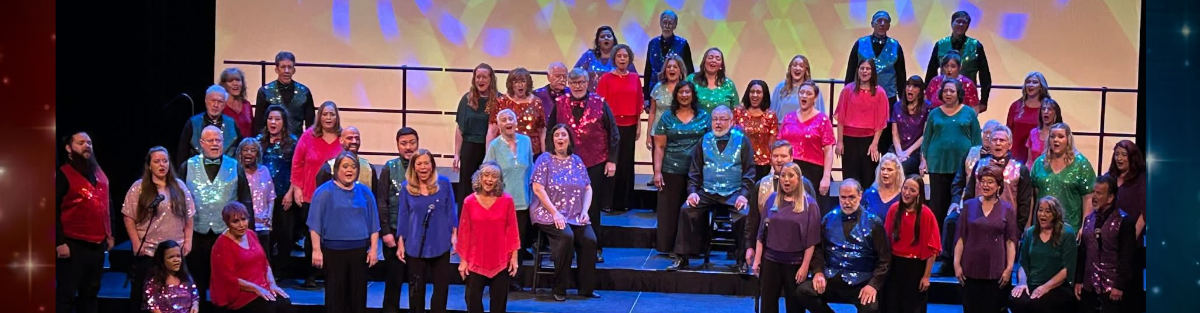
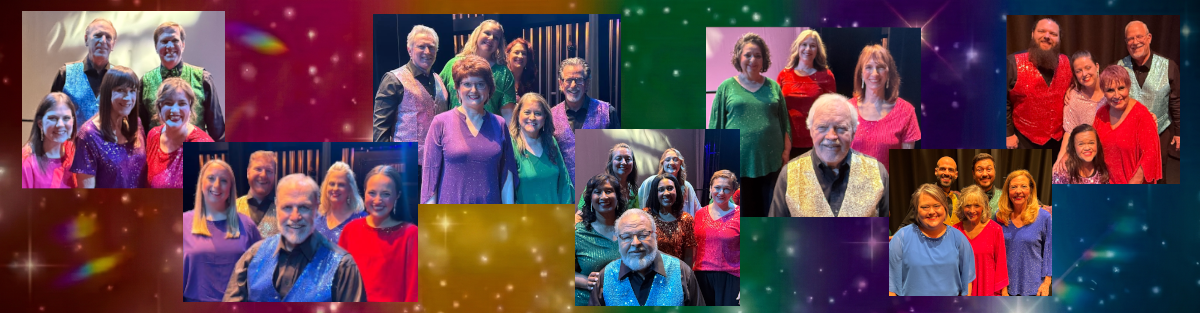
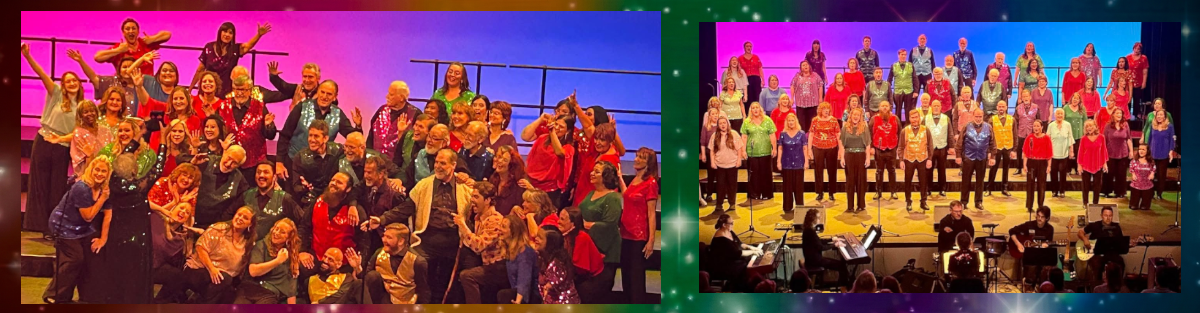
These are songs from our 2026 spring production of Color My World.
Artist / Writers: Written by Paul McCartney (credited to Lennon–McCartney) and released on The Beatles’ 1968 self-titled double album (The White Album).
Overview: McCartney was inspired to write the song after reading about the Civil Rights Movement and racial tensions rising in the United States during the spring of 1968. The "blackbird" serves as a metaphor for Black women struggling for rights and freedom during the American civil rights movement.
Artist / Writers: Written and performed by Michael Jackson, with rap lyrics by Bill Bottrell.
Overview: Released in November 1991 as the lead single from Jackson’s album Dangerous, the song promotes racial harmony and unity. It debuted at #1 on the Billboard Hot 100 and stayed at the top spot for seven consecutive weeks, featuring an iconic music video directed by John Landis that showcased pioneering visual morphing technology.
Artist / Writers: Written and original recording by Joni Mitchell.
Overview: Released in 1970 on her album Ladies of the Canyon, Mitchell was inspired to write the song during her first trip to Hawaii. Looking out her hotel window, she saw majestic mountains in the distance, but directly below was a massive paved parking lot. The track became an iconic environmental anthem famous for the line, "They paved paradise and put up a parking lot."
Artist / Writers: Written by Joe Raposo for Sesame Street.
Overview: First performed by Jim Henson as Kermit the Frog in 1970, the song was originally created to help children understand acceptance and self-worth despite physical differences. Beyond children's television, it evolved into a beloved jazz standard covered by legends like Frank Sinatra, Ray Charles, and Nina Simone.
Artist / Writers: Written by Billy Steinberg and Tom Kelly; made famous by Cyndi Lauper.
Overview: Released in 1986 as the title track of Lauper's second studio album, the song was originally written about Steinberg’s mother. Lauper reshaped the arrangement into a soft, vulnerable ballad. It became her second #1 hit on the Billboard Hot 100 and was widely adopted as a major anthem for the LGBTQ+ community.
Artist / Writers: Written by Paul Williams and Kenneth Ascher.
Overview: Featured as the opening song of The Muppet Movie (1979), performed by Jim Henson as Kermit the Frog singing on a banjo in a swamp. The song explores themes of hope, imagination, and longing. It was nominated for an Academy Award for Best Original Song and remains one of the most iconic pieces of music in children's media history.
Artist / Writers: Written and recorded by Van Morrison.
Overview: Released in 1967 as Morrison’s debut single as a solo artist after leaving the band Them. Originally titled "Brown-Skinned Girl" about an inter-racial relationship, Morrison changed it to "Brown Eyed Girl" during recording. It became his signature song and a staple of classic rock radio.
Artist / Writers: Written by Irving Berlin in 1926.
Overview: Berlin composed the song as a last-minute addition to the Rodgers and Hart musical Betsy. It quickly became a smash hit and was notably performed by Al Jolson in 1927’s The Jazz Singer, the first feature-length motion picture with synchronized sound. Ella Fitzgerald recorded a definitive jazz version in 1958 for her celebrated album Ella Fitzgerald Sings the Irving Berlin Song Book.
Artist / Writers: Music by Ray Henderson, lyrics by Mort Dixon.
Overview: First published in 1926, this jazz standard was popular during the late 1920s with early recordings by Gene Austin and Nick Lucas. Over the decades, it became a cornerstone of jazz performance, recorded by icons such as Miles Davis, John Coltrane, and Nina Simone.
Artist / Writers: Performed by 7th Heaven.
Overview: Released by the Chicago-based pop-rock band 7th Heaven on their 2008 album USA-31. Known for their upbeat, radio-friendly pop-rock style, the song uses color imagery to describe seeing life and love with clarity and energy.
Artist / Writers: Traditional Appalachian folk song.
Overview: Dating back to the 19th century (with origins traced back to Scotland and England before taking root in the Appalachian Mountains), this traditional ballad was popularized in the 20th century by folk artists like John Jacob Niles. Nina Simone’s haunting 1959 and 1964 recordings cemented it as a celebrated staple of jazz and soul repertoire.
Artist / Writers: Written by James Pankow; performed by Chicago.
Overview: Released in 1970 on the band’s second album, Chicago, the track was originally composed as part of a 13-minute suite titled "Ballet for a Girl in Buchannon." Featuring a distinct arpeggiated piano pattern and a flute solo by Walter Parazaider, it served as the B-side to "Make Me Smile" and became a major staple at high school proms throughout the 1970s.
Artist / Writers: Performed by Ejae, Audrey Nuna, and Rei Ami as the fictional K-pop group HUNTR/X (Huntrix); written by Ejae, Mark Sonnenblick, Joong Gyu Kwak, Yu Han Lee, Hee Dong Nam, Jeong Hoon Seo, and Teddy Park.
Overview: Released as a single from the soundtrack to the 2025 animated Netflix film KPop: Demon Hunters, "Golden" serves as the film's centerpiece "I Want" song. In the movie's narrative, the track doubles as a magical weapon designed to create a protective barrier against demons while expressing the inner identity struggle of lead singer Rumi. The song became a massive global hit, topping charts worldwide and winning Best Song Written for Visual Media at the Grammy Awards and Best Original Song at the Academy Awards.
Artist / Writers: Written by Bernie Wayne and Lee Morris in 1950.
Overview: First recorded by Tony Bennett in 1951, the song reached its peak popular culture impact in 1963 when Bobby Vinton recorded his version, taking it to #1 on the Billboard Hot 100. The song later inspired David Lynch’s acclaimed 1986 mystery film of the same name.
Artist / Writers: Written by Arthur Hamilton.
Overview: Overview: Originally composed for the 1955 movie Pete Kelly's Blues (where it was performed by Peggy Lee), the song evolved into one of the most famous children's educational nursery rhymes in the English-speaking world. Known for its famous opening lines—"Red and yellow and pink and green, purple and orange and blue"—it is widely used in early childhood education to help young children identify and memorize color names.
Artist / Writers: Written by Milton DeLugg and Willie Stein.
Overview: First recorded in 1950, Nat King Cole made the song famous alongside the Stan Kenton Orchestra. The track describes the sudden, overwhelming sensation of falling in love using flash-bang visual metaphors ("Flash! Bam! Alakazam!").
Artist / Writers: Written by Billy Steinberg and Tom Kelly.
Overview: Recorded by Australian singer-songwriter Sia in 2016 for the animated film soundtrack Trolls. Sia’s rendition provided a tender, acoustic interpretation of the 1986 classic, focusing on emotional vulnerability, healing, and personal support.
Artist / Writers: Music by Duncan Sheik, lyrics by Steven Sater.
Overview: Serves as the finale number of the hit 2006 Broadway musical Spring Awakening (adapted from Frank Wedekind's 1891 German play). The song offers a poetic, uplifting conclusion following the tragedy faced by the teenage characters, symbolizing hope, growth, and the passage of generations.
Artist / Writers: Music by Andrew Lloyd Webber, lyrics by Tim Rice.
Overview: The iconic opening numbers of the 1968 biblical musical Joseph and the Amazing Technicolor Dreamcoat. Originally commissioned as a short 15-minute pop cantata for a school choir performance in London, it was continuously expanded over subsequent years into a global smash-hit musical that introduces Joseph, his eleven brothers, and his famous coat of many colors.